Archbishop of Canterbury's New Year message:
God 'doesn't do waste'
By this stage of the holiday season, I imagine you might be looking with dismay at your overflowing rubbish bin, or the mountain of debris piling up outside your back door. Food, drink, presents - they all come with more and more packaging. Even the most eco-conscious of us is likely to have a bit of a bad conscience after Christmas.
Despite constant talk about recycling and thinking "green" - we're still a society that produces fantastic quantities of waste. From the big issues around toxic industrial and nuclear waste to the domestic questions of managing day-to-day waste and the build-up of stuff around us that can't be recycled, it's not something we can ignore. Look at the number of plastic bags flapping around by the roadside, in town and country alike - and you see what I mean.
What I wonder is - how much this influences attitudes in other parts of our lives?
In a society where we think of so many things as disposable; where we expect to be constantly discarding last year's gadget and replacing it with this year's model - do we end up tempted to think of people and relationships as disposable? Are we so fixated on keeping up with change that we lose any sense of our need for stability?
One of the buzzwords of recent years has been 'sustainability' - and, like all buzzwords, it tends to be used annoyingly all over the place, often for things it doesn't really fit. But what the word points to is the sense of obligation that most of us share at some deep level - the obligation to hand on to our children and grandchildren a legacy that helps them live and flourish. Building to last is something we all understand.
And if we live in a context where we construct everything from computers to buildings to relationships on the assumption that they'll need to be replaced before long - what have we lost?
Christians, like Jews and many other religious people too, talk a lot about God as 'faithful'. God is involved in 'building to last', in creating a sustainable world and sustainable relationships with us human beings. He doesn't give up on the material of human lives. He doesn't throw it all away and start again. And he asks us to approach one another and our physical world with the same commitment. The life of Jesus, the life in which God identifies completely with our flesh and blood is the supreme sign of that commitment.
God doesn't do waste.
He doesn't regard anyone as a 'waste of space', as not worth his time - from the very beginnings of life to its end, whether they are successful, articulate, productive or not. And so a life that communicates a bit of what God is like, is a life that doesn't give up - that doesn't settle down with a culture of waste and disposability - whether with people, or with things.
Perhaps a good resolution for the New Year would be to keep asking what world we want to pass on to the next generation - indeed, to ask whether we have a real and vivid sense of that next generation.
A lot of the time, we just don't let ourselves think about the future with realism. A culture of vast material waste and emotional short-termism is a culture that is a lot more fragile than it knows. How much investment are we going to put in towards a safer and more balanced future?
A big question. But too big to avoid.
And if we feel a bit paralysed by just how big it is - well, we can at least start by a visit this week to the nearest recycling bins.
God bless you all in this New Year; may you have patience for the long view - confident that God takes the long view of you and isn't going to give up.
Happy New Year.
Rowan Williams, Archbishop of Canterbury
Monday, December 31, 2007


Thursday, December 27, 2007
How many earths would we need if everyone lived like me?

What would the world look like if everyone lived like me?
Welcome to Consumer Consequences, our interactive game designed to illustrate the impact of our lifestyles on the Earth. It's part of American Public Media's™ special series, "Consumed," which explores whether the modern American lifestyle is sustainable in the long run. (Stay tuned to this site for more "Consumed" content).
Consumer Consequences will ask you a series of questions about your lifestyle, and as you play, it will show you how many "Earths" of natural resources it would take to sustain all 6.6 billion humans… if everyone lived like you.
Click here to play.
Tuesday, December 25, 2007
Archbishop of Canterbury "Green" Christmas Sermon
Eleven days ago, the Church celebrated the memory of the sixteenth century Spanish saint, John of the Cross, Juan de Yepes – probably the greatest Christian mystical writer of the last thousand years, a man who worked not only for the reform and simplification of the monastic life of his time but also for the purification of the inner life of Christians from fantasy, self-indulgence and easy answers. Those who’ve heard of him will most likely associate him with the phrase that he introduced into Christian thinking about the hard times in discipleship – ‘the dark night of the soul’. He is a ruthless analyst of the ways in which we prevent ourselves from opening up to the true joy that God wants to give us by settling for something less than the real thing and confusing the truth and grace of God with whatever makes us feel good or comfortable. He is a disturbing and difficult writer; not, you’d imagine, a man to go to for Christmas good cheer.
But it was St John who left us, in some of his poems, one of the most breathtakingly imaginative visions ever of the nature of Christmas joy, and who, in doing this, put his own analyses of the struggles and doubts of the life of prayer and witness firmly into an eternal context. He is recognised as one of the greatest poets in the Spanish language; and part of his genius is to use the rhythms and conventions of popular romantic poetry and folksong to convey the biblical story of the love affair between God and creation.
One of his sequences of poetry is usually called simply the ‘Romances’. It’s a series of seventy five short, mostly four line, verses, written in the simplest possible style and telling the story of the world from the beginning to the first Christmas – but very daringly telling this story from God’s point of view. It begins like a romantic ballad. ‘Once upon a time’, God was living eternally in heaven, God the Father, the Son and the Holy Spirit, with perfect love flowing uninterrupted between them. And out of the sheer overflowing energy of his love, God the Father decides that he will create a ‘Bride’ for his Son. The imagery is powerful and direct: there will be someone created who will be able, says God the Father, to ‘sit down and eat bread with us at one table, the same bread that I eat.’
And so the world is made as a home for the Bride. Who is this Bride? It is the whole world of beings who are capable of love and understanding, the angels and the human race. In the rich diversity of the world, the heavens and the earth together, God makes an environment in which love and intelligence may grow, until they are capable of receiving the full impact of God’s presence. And so the world waits for the moment when God can at last descend and – in a beautiful turning upside-down of the earlier image – can sit at the same table and share the same bread as created beings.
As the ages pass on earth, the longing grows and intensifies for this moment to arrive; and at last God the Father tells the Son that it is time for him to meet his Bride face to face on earth, so that, as he looks at her directly, she may reflect his own likeness. When God has become human, then humanity will recognise in his face, in Jesus’ face, its own true nature and destiny. And the angels sing at the wedding in Bethlehem, the marriage of heaven and earth, where, in the haunting final stanza of the great poetic sequence, humanity senses the joy of God himself, and the only one in the scene who is weeping is the child, the child who is God in the flesh: ‘The tears of man in God, the gladness in man, the sorrow and the joy that used to be such strangers to each other.’
Well, that is how John of the Cross sets out the story of creation and redemption, the story told from God’s point of view. And there are two things in this that are worth our thoughts and our prayers today. The first is one of the strangest features of John’s poems. The coming of Christ is not first and foremost a response to human crisis; there is remarkably little about sin in these verses. We know from elsewhere that John believed what all Christians believe about sin and forgiveness; and even in these poems there is reference to God’s will to save us from destruction. But the vision takes us further back into God’s purpose. The whole point of creation is that there should be persons, made up of spirit and body, in God’s image and likeness, to use the language of Genesis and of the New Testament, who are capable of intimacy with God – not so that God can gain something but so that these created beings may live in joy. And God’s way of making sure that this joy is fully available is to join humanity on earth so that human beings may recognise what they are and what they are for. The sinfulness, the appalling tragedy of human history has set us at what from our point of view seems an unimaginable distance from God; yet God, we might say, takes it in his stride. It means that when he appears on earth he takes to himself all the terrible consequences of where we have gone wrong – ‘the tears of man in God’; yet it is only a shadow on the great picture, which is unchanged.
We are right to think about the seriousness of sin, in other words; but we see it properly and in perspective only when we have our eyes firmly on the greatness and unchanging purpose of God’s eternal plan for the marriage of heaven and earth. It is a perspective that is necessary when our own sins or those of a failing and suffering world fill the horizon for us, so that we can hardly believe the situation can be transformed. For if God’s purpose is what it is, and if God has the power and freedom to enter our world and meet us face to face, there is nothing that can destroy that initial divine vision of what the world is for and what we human beings are for. Nothing changes, however far we fall; if we decide to settle down with our failures and give way to cynicism and despair, that is indeed dreadful – but God remains the same God who has decided that the world should exist so that it may enter into his joy. At Christmas, when this mystery is celebrated, we should above all renew our sheer confidence in God. In today’s Bethlehem, still ravaged by fear and violence, we can still meet the God who has made human tears his own and still works ceaselessly for his purpose of peace and rejoicing, through the witness of brave and loving people on both sides of the dividing wall.
But the second point growing out of this is of immense practical importance. The world around us is created as a framework within which we may learn the first beginnings of growing up towards what God wants for us. It is the way it is so that we can be directed towards God. And so this is how we must see the world. Yes, it exists in one sense for humanity’s sake; but it exists in its own independence and beauty for humanity’s sake – not as a warehouse of resources to serve humanity’s selfishness. To grasp that God has made the material world, ‘composed’, says John of the Cross, ‘of infinite differences’, so that human beings can see his glory is to accept that the diversity and mysteriousness of the world around is something precious in itself. To reduce this diversity and to try and empty out the mysteriousness is to fail to allow God to speak through the things of creation as he means to. ‘My overwhelming reaction is one of amazement. Amazement not only at the extravaganza of details that we have seen; amazement, too, at the very fact that there are any such details to be had at all, on any planet. The universe could so easily have remained lifeless and simple…Not only is life on this planet amazing, and deeply satisfying, to all whose senses have not become dulled by familiarity: the very fact that we have evolved the brain power to understand our evolutionary genesis redoubles the amazement and compounds the satisfaction’. The temptation to quote Richard Dawkins from the pulpit is irresistible; in this amazement and awe, if not in much else, he echoes the sixteenth century mystic.
So to think of our world as a divine ‘prompt’ to our delight and reverence, so that its variety, the ‘extravaganza of details’, is a precious thing, is to begin to be committed to that reverent guardianship of this richness that is more and more clearly required of us as we grow in awareness of how fragile all this is, how fragile is the balance of species and environments in the world and how easily our greed distorts it. When we threaten the balance of things, we don’t just put our material survival at risk; more profoundly, we put our spiritual sensitivity at risk, the possibility of being opened up to endless wonder by the world around us.
And it hardly needs adding that this becomes still more significant when we apply John of the Cross’s vision to our human relations. Every person and every diverse sort of person exists for a unique joy, the joy of being who they are in relation to God, a joy which each person will experience differently. And when I encounter another, I encounter one who is called to such a unique joy; my relation with them is part of God’s purpose in bringing that joy to perfection – in me and in the other. This doesn’t rule out the tension and conflict that are unavoidable in human affairs – sometimes we challenge each other precisely so that we can break through what it is in each other that gets in the way of God’s joy, so that we can set each other free for this joy.
This, surely, is where peace on earth, the peace the angels promise to the shepherds, begins, here and nowhere else, here where we understand what human beings are for and what they can do for each other. The delighted reverence and amazement we should have towards the things of creation is intensified many times where human beings are concerned. And if peace is to be more than a pause in open conflict, it must be grounded in this passionate amazed reverence for others.
The birth of Jesus, in which that power which holds the universe together in coherence takes shape in history as a single human body and soul, is an event of cosmic importance. It announces that creation as a whole has found its purpose and meaning, and that the flowing together of all things for the joyful transfiguration of our humanity is at last made visible on earth.
‘So God henceforth will be human, and human beings caught up in God. He will walk around in their company, eat with them and drink with them. He will stay with them always, the same for ever alongside them, until this world is wrapped up and done with’.
Glory to God in the highest , and peace on earth to those who are God’s friends.
Rowan Williams - Archbishop of Canterbury
But it was St John who left us, in some of his poems, one of the most breathtakingly imaginative visions ever of the nature of Christmas joy, and who, in doing this, put his own analyses of the struggles and doubts of the life of prayer and witness firmly into an eternal context. He is recognised as one of the greatest poets in the Spanish language; and part of his genius is to use the rhythms and conventions of popular romantic poetry and folksong to convey the biblical story of the love affair between God and creation.
One of his sequences of poetry is usually called simply the ‘Romances’. It’s a series of seventy five short, mostly four line, verses, written in the simplest possible style and telling the story of the world from the beginning to the first Christmas – but very daringly telling this story from God’s point of view. It begins like a romantic ballad. ‘Once upon a time’, God was living eternally in heaven, God the Father, the Son and the Holy Spirit, with perfect love flowing uninterrupted between them. And out of the sheer overflowing energy of his love, God the Father decides that he will create a ‘Bride’ for his Son. The imagery is powerful and direct: there will be someone created who will be able, says God the Father, to ‘sit down and eat bread with us at one table, the same bread that I eat.’
And so the world is made as a home for the Bride. Who is this Bride? It is the whole world of beings who are capable of love and understanding, the angels and the human race. In the rich diversity of the world, the heavens and the earth together, God makes an environment in which love and intelligence may grow, until they are capable of receiving the full impact of God’s presence. And so the world waits for the moment when God can at last descend and – in a beautiful turning upside-down of the earlier image – can sit at the same table and share the same bread as created beings.
As the ages pass on earth, the longing grows and intensifies for this moment to arrive; and at last God the Father tells the Son that it is time for him to meet his Bride face to face on earth, so that, as he looks at her directly, she may reflect his own likeness. When God has become human, then humanity will recognise in his face, in Jesus’ face, its own true nature and destiny. And the angels sing at the wedding in Bethlehem, the marriage of heaven and earth, where, in the haunting final stanza of the great poetic sequence, humanity senses the joy of God himself, and the only one in the scene who is weeping is the child, the child who is God in the flesh: ‘The tears of man in God, the gladness in man, the sorrow and the joy that used to be such strangers to each other.’
Well, that is how John of the Cross sets out the story of creation and redemption, the story told from God’s point of view. And there are two things in this that are worth our thoughts and our prayers today. The first is one of the strangest features of John’s poems. The coming of Christ is not first and foremost a response to human crisis; there is remarkably little about sin in these verses. We know from elsewhere that John believed what all Christians believe about sin and forgiveness; and even in these poems there is reference to God’s will to save us from destruction. But the vision takes us further back into God’s purpose. The whole point of creation is that there should be persons, made up of spirit and body, in God’s image and likeness, to use the language of Genesis and of the New Testament, who are capable of intimacy with God – not so that God can gain something but so that these created beings may live in joy. And God’s way of making sure that this joy is fully available is to join humanity on earth so that human beings may recognise what they are and what they are for. The sinfulness, the appalling tragedy of human history has set us at what from our point of view seems an unimaginable distance from God; yet God, we might say, takes it in his stride. It means that when he appears on earth he takes to himself all the terrible consequences of where we have gone wrong – ‘the tears of man in God’; yet it is only a shadow on the great picture, which is unchanged.
We are right to think about the seriousness of sin, in other words; but we see it properly and in perspective only when we have our eyes firmly on the greatness and unchanging purpose of God’s eternal plan for the marriage of heaven and earth. It is a perspective that is necessary when our own sins or those of a failing and suffering world fill the horizon for us, so that we can hardly believe the situation can be transformed. For if God’s purpose is what it is, and if God has the power and freedom to enter our world and meet us face to face, there is nothing that can destroy that initial divine vision of what the world is for and what we human beings are for. Nothing changes, however far we fall; if we decide to settle down with our failures and give way to cynicism and despair, that is indeed dreadful – but God remains the same God who has decided that the world should exist so that it may enter into his joy. At Christmas, when this mystery is celebrated, we should above all renew our sheer confidence in God. In today’s Bethlehem, still ravaged by fear and violence, we can still meet the God who has made human tears his own and still works ceaselessly for his purpose of peace and rejoicing, through the witness of brave and loving people on both sides of the dividing wall.
But the second point growing out of this is of immense practical importance. The world around us is created as a framework within which we may learn the first beginnings of growing up towards what God wants for us. It is the way it is so that we can be directed towards God. And so this is how we must see the world. Yes, it exists in one sense for humanity’s sake; but it exists in its own independence and beauty for humanity’s sake – not as a warehouse of resources to serve humanity’s selfishness. To grasp that God has made the material world, ‘composed’, says John of the Cross, ‘of infinite differences’, so that human beings can see his glory is to accept that the diversity and mysteriousness of the world around is something precious in itself. To reduce this diversity and to try and empty out the mysteriousness is to fail to allow God to speak through the things of creation as he means to. ‘My overwhelming reaction is one of amazement. Amazement not only at the extravaganza of details that we have seen; amazement, too, at the very fact that there are any such details to be had at all, on any planet. The universe could so easily have remained lifeless and simple…Not only is life on this planet amazing, and deeply satisfying, to all whose senses have not become dulled by familiarity: the very fact that we have evolved the brain power to understand our evolutionary genesis redoubles the amazement and compounds the satisfaction’. The temptation to quote Richard Dawkins from the pulpit is irresistible; in this amazement and awe, if not in much else, he echoes the sixteenth century mystic.
So to think of our world as a divine ‘prompt’ to our delight and reverence, so that its variety, the ‘extravaganza of details’, is a precious thing, is to begin to be committed to that reverent guardianship of this richness that is more and more clearly required of us as we grow in awareness of how fragile all this is, how fragile is the balance of species and environments in the world and how easily our greed distorts it. When we threaten the balance of things, we don’t just put our material survival at risk; more profoundly, we put our spiritual sensitivity at risk, the possibility of being opened up to endless wonder by the world around us.
And it hardly needs adding that this becomes still more significant when we apply John of the Cross’s vision to our human relations. Every person and every diverse sort of person exists for a unique joy, the joy of being who they are in relation to God, a joy which each person will experience differently. And when I encounter another, I encounter one who is called to such a unique joy; my relation with them is part of God’s purpose in bringing that joy to perfection – in me and in the other. This doesn’t rule out the tension and conflict that are unavoidable in human affairs – sometimes we challenge each other precisely so that we can break through what it is in each other that gets in the way of God’s joy, so that we can set each other free for this joy.
This, surely, is where peace on earth, the peace the angels promise to the shepherds, begins, here and nowhere else, here where we understand what human beings are for and what they can do for each other. The delighted reverence and amazement we should have towards the things of creation is intensified many times where human beings are concerned. And if peace is to be more than a pause in open conflict, it must be grounded in this passionate amazed reverence for others.
The birth of Jesus, in which that power which holds the universe together in coherence takes shape in history as a single human body and soul, is an event of cosmic importance. It announces that creation as a whole has found its purpose and meaning, and that the flowing together of all things for the joyful transfiguration of our humanity is at last made visible on earth.
‘So God henceforth will be human, and human beings caught up in God. He will walk around in their company, eat with them and drink with them. He will stay with them always, the same for ever alongside them, until this world is wrapped up and done with’.
Glory to God in the highest , and peace on earth to those who are God’s friends.
Rowan Williams - Archbishop of Canterbury
Saturday, December 8, 2007

Monday, November 5, 2007
Exxon and Cordoba: failure of justice
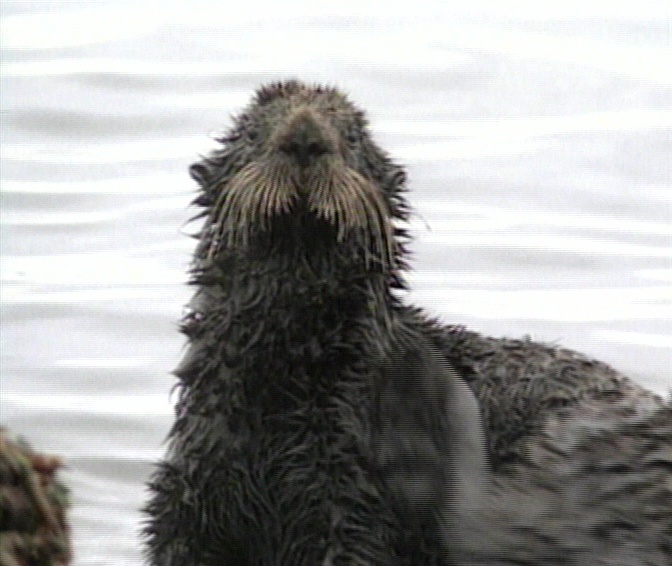
Riki Ott, PhD., a community activist, former fisherm'am, has a degree in marine toxicology with a specialty in oil pollution and the author of Sound Truth and Corporate Myth$: The Legacy of the Exxon Valdez Oil Spill, writes about the continuing saga of the Exxon Valdez oil spill, the effects on Cordova Alaska, and the failure of our justice system.
The Supreme Court's recent decision to hear ExxonMobil's reasons to void the $2.5 billion punitive award in the Exxon Valdez case hit the town of Cordova, Alaska, hard. This small coastal fishing community -- my hometown -- along with the Alaska Native villages in Prince William Sound have borne the brunt of the largest crude oil spill in America's waters; a spill that took place more than 18 years ago, but one that continues to hold the region hostage.
The second painful blow was the high court's decision to not even hear our reasons why the award should be restored to the full $5 billion that a jury of peers decided was necessary to punish the corporate giant back in 1994.
While media pundits, lawyers, and scholars play the Supreme Court's decisions back and forth like a ping-pong ball, people in Cordova share a completely different perspective of this story. It's not about whether the Supreme Court should hear the case. To us, it's about justice and reparation -- making us whole, a promise Exxon made to the community five days after the spill. A promise that Exxon broke before the trial even started five years after the spill.
To us, it's about more than an oil spill, the world's largest oil corporation, and a small fishing community in Alaska. It's about America's failed legal system that inherently cannot dispense justice in the face of corporate globalization.
Those affected by the spill offer some solutions for developing a just system that works for people.
First, post-disaster disputes could be minimized during preliminary planning and scoping of projects by negotiated, legally-binding agreements -- now that we are better informed of the ecological and human costs of disaster.
Second, financial incentives and rules could be created to encourage dispute resolution through non-adversarial negotiated settlements. Such techniques have proven successful even for disasters involving toxic exposure.
Third, incentives could be created to shorten litigation timelines by eliminating mechanisms that reward profits through stalling.
Fourth, if punitive damages are to be effectively applied, then they must be linked with corporate profits rather than compensatory damages and they should be shared not only among victims, but also among the injured communities to rebuild areas devastated by disaster.
In Cordova, we hope that it is just a matter of time before these suggestions or other similar ones are demanded by professionals, activists, and victims fed up with the American "injustice system."
We know that change will have to come from each of us, as there is little hope that the Supreme Court, or any other branch of the current judicial system, will take it upon itself to keep from doing more harm to those it was designed to protect.
Read it all here
Friday, November 2, 2007
Blessed Unrest

A new book by Paul Hawken:
A leading environmentalist and social activist's examination of the worldwide movement for social and environmental change.
Paul Hawken has spent over a decade researching organizations dedicated to restoring the environment and fostering social justice.
From billion-dollar nonprofits to single-person dot.causes, these groups collectively comprise the largest movement on earth, a movement that has no name, leader, or location, and that has gone largely ignored by politicians and the media. Like nature itself, it is organizing from the bottom up, in every city, town, and culture. and is emerging to be an extraordinary and creative expression of people's needs worldwide.
Blessed Unrest explores the diversity of the movement, its brilliant ideas, innovative strategies, and hidden history, which date back many centuries. A culmination of Hawken's many years of leadership in the environmental and social justice fields, it will inspire and delight any and all who despair of the world's fate, and its conclusions will surprise even those within the movement itself. Fundamentally, it is a description of humanity's collective genius, and the unstoppable movement to reimagine our relationship to the environment and one another.
Read about it here
Monday, September 24, 2007
100 Top Effects of Global Warming
Center for American Progress reports on the effects of Global Warming.
Read it all here.
Global Warming Wrecks All the Fun
Say Goodbye to French Wines
Wacky temperatures and rain cycles brought on by global warming are threatening something very important: Wine. Scientists believe global warming will “shift viticultural regions toward the poles, cooler coastal zones and higher elevations.” What that means in regular language: Get ready to say bye-bye to French Bordeaux and hello to British champagne. [LA Times]
Say Goodbye to Light and Dry Wines
Warmer temperatures mean grapes in California and France develop their sugars too quickly, well before their other flavors. As a result, growers are forced to either a) leave the grapes on the vines longer, which dramatically raises the alcoholic content of the fruit or b) pick the grapes too soon and make overly sweet wine that tastes like jam. [Washington Post]
Say Goodbye to Pinot Noir
The reason you adore pinot noir is that it comes from a notoriously temperamental thin-skinned grape that thrives in cool climates. Warmer temperatures are already damaging the pinots from Oregon, “baking away” the grape’s berry flavors. [Bloomberg]
Say Goodbye to Baseball
The future of the ash tree—from which all baseball bats are made—is in danger of disappearing, thanks to a combination of killer beetles and global warming. [NY Times]
Say Goodbye to Christmas Trees
The Pine Bark Beetle, which feeds on and kills pine trees, used to be held in control by cold winter temperatures. Now the species is thriving and killing off entire forests in British Columbia, unchecked. [Seattle Post Intelligencer]
Say Goodbye to the Beautiful Alaska Vacation
Warmer weather allowed Spruce Bark Beetles to live longer, hardier lives in the forests of Kenai Peninsula in Alaska, where they killed off a section of spruce forest the size of Connecticut. [Alaska Science Forum]
Say Goodbye to Fly Fishing
As water temperatures continue to rise, researchers say rainbow trout, "already at the southern limits” of their temperature ranges in the Appalachian mountains, could disappear there over the next century. [Softpedia]
Say Goodbye to Ski Competitions
Unusually warmer winters caused the International Ski Federation to cancel last year’s Alpine skiing World Cup and opening races in Sölden, Austria. Skiers are also hard-pressed now to find places for year-round training. Olympic gold medalist Anja Paerson: “Of course we’re all very worried about the future of our sport. Every year we have more trouble finding places to train.” [NY Times]
Say Goodbye to Ski Vacations
Slopes on the East Coast last year closed months ahead of time due to warmer weather, some losing as much as a third of their season. [Washington Post]
Say Hello to Really Tacky Fake Ski Vacations
Weiner Air Force and former House Majority Leader Dick Armey are building a year-round ski resort in Texas, with “wet, white Astroturf with bristles” standing in for snow to make up for all the closed resorts around the country. [WSJ]
Say Goodbye to That Snorkeling Vacation
The elkhorn coral which used to line the floor of the Caribbean are nearly gone, “victims of pollution, warmer water and acidification from the greenhouse gas carbon dioxide seeping into oceans.” [Denver Post]
Say Goodbye to That Tropical Island Vacation
Indonesia's environment minister announced this year that scientific studies estimate about 2,000 of the country's lush tropical islands could disappear by 2030 due to rising sea levels. [ABC News]
Say Goodbye to Cool Cultural Landmarks
The World Monuments Fund recently added “global warming” as a threat in their list of the top 100 threatened cultural landmarks. “On Herschel Island, Canada, melting permafrost threatens ancient Inuit sites and a historic whaling town. In Chinguetti, Mauritania, the desert is encroaching on an ancient mosque. In Antarctica, a hut once used by British explorer Captain Robert Falcon Scott has survived almost a century of freezing conditions but is now in danger of being engulfed by increasingly heavy snows.” [AP]
Say Goodbye to Salmon Dinners
Get ready for a lot more chicken dinners: Wild pacific salmon have already vanished from 40 percent of their traditional habitats in the Northwest and the NRDC warns warmer temperatures are going to erase 41 percent of their habitat by 2090. [ENS]
Read it all here.
Subscribe to:
Posts (Atom)